

College essay examples can teach us a lot about what college admissions committees are looking for. They also show there’s no one formula for a successful college essay. For your own college essay, you will need a topic, style, and voice that are uniquely you.
You can write about anything you like, whether it’s your summer job scooping ice cream, what you’ve learned from your dog, your obsession with Harry Potter, or your love of the bassoon. Just make sure you choose a topic that reveals something important about you. Admissions committee members want to hear your unique perspective on the world.
In this article, we will break down five successful college essay examples which admissions committees particularly enjoyed. As you read these college essay samples, think about what each essay shows about the student who wrote it.
The original authors and the schools that published them get full credit for the following college essays.
College Essay Example #1
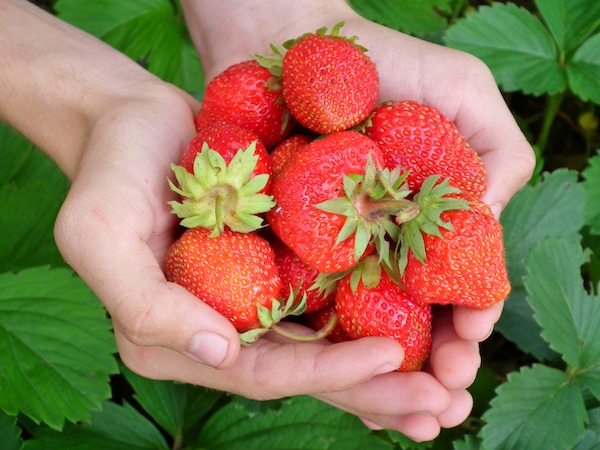
Growing Strawberries in a High School Locker
Seena, Johns Hopkins University, Class of 2020
One day this year, as I was walking by my perpetually empty locker, I was struck by an idea. I cannot identify what sparked its conception, but as my idea started to grow, thinking of possible solutions and analyzing and assessing feasibility issues began to consume me. My father calls this a “designer’s high,” and it was very familiar to me. I’ve experienced it often while collaborating with my robotics team, and in the hours I’ve spent with my father on design concepts for his prefabricated homes. Still, nothing I had worked on before was similar to the feeling this “out of the box” idea had triggered.
The “hook” of this essay works well, because it leaves us wanting to learn what idea the author was “struck by.” We also learn the author is passionate about robotics and engineering, so he has specific interests that drive him.
Growing strawberries in a high school locker seemed fairly simple at first. Despite knowing that this is not the typical habitat for strawberry plants, I knew from my green-thumbed mother that strawberries are among the easiest fruits to grow. Many students and teachers became interested in my project, yet were skeptical of my botanical prowess and quick to conclude that a plant could not possibly receive its basic necessities in a locker, which didn’t have proper ventilation, was hot and humid, and was shielded from both sunlight and any source of water. Still, I was determined to make this work. The unfriendly habitat and logistical obstacles did not deter me.
My horticultural roots stem from my mother and elementary level biology. It wasn’t until this year that my knowledge expanded beyond this casual level into a realm where biology, chemistry, and physics found beautiful, synergistic intersections. I was determined to apply what I had learned and got to work.
Note the creative diction (word choice) in these paragraphs which makes the essay more interesting: “botanical prowess”; “unfriendly habitat”; and “synergistic intersections.”
Due to the lack of electricity and direct sunlight, I decided to use a solar panel paired with a light sensor on the outside of my locker to power a strong, blue LED light, which is best for photosynthesis and plant growth. A friend taught me how to solder and helped me create the solar panel setup, which turns on the blue light only when it is dark outside so the plants experience the proper light cycles. I also set up a system to slowly water the plants automatically. This involved a series of drip bottles—which another friend had for his old, now deceased, pet guinea pig—arranged to drip into each other and then onto the soil.
For someone from a non-engineering background especially, this sounds impressive. For those from any background, the student is showing his passion and inventiveness.
Having addressed the issues of light and water, I focused on the need to circulate air. Leaving the door closed would provide essentially no circulation and would create a hot and moist environment, making the plants more susceptible to mold. After experimenting with various designs and a 3D printed prototype, I came up with an extension of the latching mechanism on the inside of my locker, which I called the “strawberry jamb.” The jamb, which I cut using our school’s CNC router, sufficiently boosts airflow by allowing the door to remain ajar about two inches while still maintaining the integrity of the existing locking mechanism. I made a beautiful wooden box, emblazoned with the laser-cut engraving “Strawberry Fields Forever” and provided proper drainage onto a tray inside the locker to avoid water damage to school property. The strawberry plants are now growing in my partially open locker providing a topic of conversation and much commentary from students walking by.
What began as a seemingly improbable idea fed my passion for creative thinking and mechanical engineering. This project not only allowed me to practically apply isolated academic principles I had studied, but it also pushed me to traverse multiple disciplines to creatively solve problems. Furthermore, it’s uniqueness beckoned for community input and collaboration, allowing me to access resources to achieve fiscally responsible solutions and ultimate success. For me, it was invigorating to propel a project that many deemed impossible into the realm of possible. I intend to continue to explore and invent because only then are new realities possible.
This essay effectively demonstrates this student’s passion for, and talent in, mechanical engineering. It also shows his creativity, sense of humor, and ability to work with others on a team. Without explicitly telling his readers, the author instead shows how he loves being part of a team through the details of the story. He comes across as inventive, creative, and collaborative — not a bad combination of traits to demonstrate in one college essay!
College Essay Example #2
Katherine Glass, Tufts University, Class of 2018
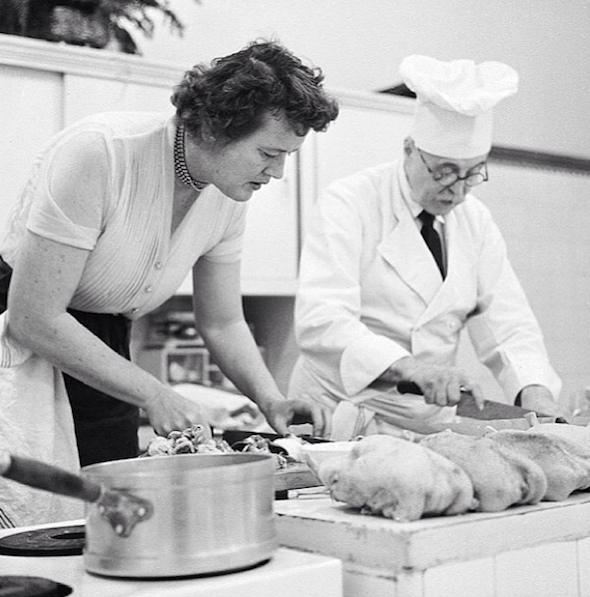
A portrait of Julia Child leans precariously on my bedside table competing for space with sticky notes, pennies, and a plastic alarm clock. Julia has been my role model ever since I spent an hour at the Smithsonian American History Museum watching cooking show after cooking show. As she dropped eggs, burnt soufflés, and prepared a whole pig, she never took herself too seriously and with her goofy smile and accompanying laugh. And yet, she was as successful in her field as anyone could ever be. Her passion completely guided her career. She taught me that it does not matter what I choose to do, it only matters that I do it with my whole self; zealously and humorously.
The first sentence of the essay uses descriptive details to hook the reader. We’re immediately curious about why this student has a portrait of Julia Child on her bedside table. Curiosity is a great feeling to evoke in your reader; it makes them want to keep reading!
Unlike Julia, I do not aspire to be a chef. Brownies out of a box may just be the highlight of my baking career. Something I have been passionate about for my whole life, however, is teaching. The first traces of my excitement came from a summer camp that I founded when I was seven years old. Motivated by too many imperfect summer camp experiences, I established my ideal summer camp, one in which campers could choose their activities, from banana split tutorials to wacky hat-making. So that year it began, with seven five-year-old campers in my backyard. For six consecutive years, I ran my summer camp, each year tweaking and improving from the years before.
This paragraph shifts the focus to something very impressive that the author has accomplished: founding a summer camp at the age of seven. This student is able to walk that careful line of showing off their accomplishments without bragging, an important skill in a college essay. Here, we learn the author is entrepreneurial, motivated, and hard working. We’re already getting to know her personality by the second paragraph.
Chebeague Island, Maine, established a preschool in the spring of 2012, run out of a trailer by a recent college graduate. I volunteered as an intern. For three months, I helped organize for the summer and the following year. I took out the trash, cleaned, and sorted toys, all while studying how to incorporate educational material into preschool activities. I wrote curriculum and researched preschool regulations to ensure that we were in compliance. We created a safe classroom, an academic plan for the upcoming year, and a balance between learning and playing in the classroom. By the end of the summer the intern became the co-director of the summer preschool program.
The author continues to impress us with her accomplishments at a young age through the details of her story. She shows how dedicated she was to the preschool program, plus she continues to reveal that working hard is an essential aspect of her identity.
This past June, I returned to the trailer to find the space and program in complete disarray. Since the previous summer, the preschool had seen two new directors and the latest was spread thin, juggling maintenance, finances and curriculum planning. My progress had not endured. After sulking for a week, I decided I was better suited to envelop Julia’s mentality. What did she do when she flipped a burger onto the ground? She smiled, laughed at the camera, picked it up, reshaped it a little, and kept right on going. So that’s what I did. I brought in a group of friends to clean and organize the trailer. I initiated a “lobster-roll” fundraiser, and Island lobstermen donated lobsters while their wives came together to pick meat from the shells. It was wildly successful and thrived on the community’s spirit. Then I worked to reinstate some sort of educational value into the summer program. We danced to Spanish and Ghanaian music, crafted wacky hats, and read books about the lobstering industry, an aspect of their community that is so significant.
Here, the author brings Julia Child back into the essay, showing the connection of the famous chef to her own life. Child has served as a source of motivation and an example of how to persevere when the going gets tough.
My past two summers have been exhausting and all too frequently frustrating but ultimately the Chebeague Island Preschool, along with many other teaching experiences, has exposed me to the ground level of education policy in the United States. After this past summer my goal is to become a future U.S. Secretary of Education.
So my portrait of Julia is by my bedside to remind me. Remind me that throughout the tedium of my extremely busy life there is something that I am passionate about. To remind me that personality and humor are essential to success. And remind me that the sort of passion I need to succeed is not the type that will let me give in to small setbacks along the way.
This student’s passion for education and desire to make a difference in her career are very clear in these final paragraphs. We’re left with a strong impression of her motivations and abilities.
College Essay Example #3
Just Keep Folding
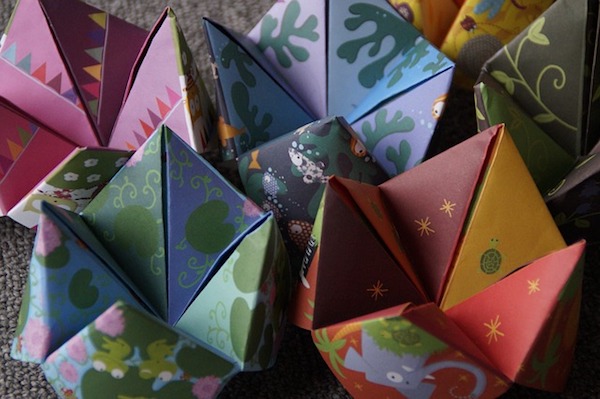
Having explored the myths from ancient Greece, Rome, and Egypt, my curiosity was piqued in eighth grade by a simple legend from Japanese lore. If you fold one thousand paper cranes, the gods will grant you one wish. I took it as a challenge. My previous forays into origami had ended poorly, but I was so excited to begin my quest that this detail seemed inconsequential. My art teacher loaned me a piece of origami paper and, armed with an online tutorial, my quest began. Like an early prototype of the airplane, I ascended towards my dreams for a glorious moment before nose-diving into the ground. The first crane was a disastrous failure of wrinkly lines and torn paper. Too embarrassed to ask for another, I turned to my stack of Post-it notes. By the third attempt, I ended up with a sticky pink paper crane. Holding that delicate bird, I was flooded with triumph and elation.
The hook in the first paragraph demonstrates the author’s curiosity, enthusiasm for learning and trying new things, and interest in taking on personal challenges. This student has a very strong writing style, using similes (“like an early prototype of the airplane, I ascended towards my dreams…”) and strong visual imagery (“wrinkly lines and torn paper”) to vividly bring the essay to life.
The first two hundred cranes were all crafted from Post-it notes. Armed with a pack of highlighters, I decorated each piece of paper individually. I folded cranes at home, between classes, and in the car. My fingers were permanently sticky from the glue I scraped off every square. Slowly, my collection grew: first ten, then fifty, then one hundred. Before the task could become monotonous, I started experimenting. How small was it possible for a crane to be? Smaller than a golf ball? Smaller than a dime? Small enough to sit on the end of a pencil? Any size was attainable. I could make a crane smaller than almost any arbitrary form of measurement. Soon I could finish a crane in fifty seconds or with my eyes closed. Anything square and foldable became my medium. Paper towels, candy wrappers, and aluminum foil joined my vibrant menagerie of carefully folded paper. I was unstoppable; that wish was as good as mine.
Note the varying sentence structures in this paragraph, which make it interesting to read. The author also uses questions to show her thinking and creativity as she tries to meet her challenge.
By six hundred cranes, the increasing demands of high school academics caused my pace to slow. I despaired. I wouldn’t let this be another ambitious project that I couldn’t finish.
My cranes mattered to me. As an outlet for expression, they served as a way to defuse frustration and sadness, and a source of pride and joy. Their creation allows me to bring beauty to the world and to find a sense of order in the bustle and chaos of life. There is a lot of beauty to be found in tiny things. I’m reminded that little gestures have a lot of meaning. I have given away cranes to my friends as a pick-me-up on bad days, and I have made cranes to commemorate people, such as the dark green crane I made the day my grandmother died. They are a symbol of hope to remind me what I have accomplished.
This paragraph shows very important qualities of this author. She is expressive and creative, she understands there is beauty in small things, and she is kind to others. She is able to reflect and even create symbolism in her life through the cranes and their connection to significant moments.
So, I pushed myself to keep working and to keep folding one crane at a time. My determination paid off, and in the summer after sophomore year, my passion was reinvigorated. One month before the end of junior year, I folded my thousandth paper crane. As I leaned over the open drawer brimming with origami pieces in a multitude of sizes and colors, I felt a rush of satisfaction and triumph. Not only was 1,000 cranes an achievement in its own right, but I proved to myself that I can finish what I start.
The world is filled with big numbers. College tuition, monthly rent, and car prices deal in the many thousands. Those figures are incomprehensible to someone who has never interacted with anything so large, and I wanted to understand them. A thousand will never simply be a number to me: it is hundreds upon hundreds of hand-folded cranes combined with years of effort.
So what did I wish for? It turns out, I didn’t need the wish. I learned I have the power to make things happen for myself.
The ending of this essay wraps up the author’s point nicely, and gives the “bigger picture” of the crane folding story. She comes across as hard-working, creative, interesting, and able to derive lessons from small things in life. She tells the readers that she knows she can “make things happen” for herself. She draws a lesson from her experiences and shares something important about her identity — exactly what a college essay should accomplish!

College Essay Example #4
Intercom Enthusiast
The most exciting time to live in Vermont is mid-February. This is the time when one is given the privilege of a 30-minute walk to school in sub-zero temperatures, with a 30-minute trudge home in the dark after a long day. It’s been four months since winter began, and it’ll be two more until it’s over. The firewood is being rationed to keep the house at a barely livable temperature, a steamy 50 degrees, and colds are so rampant that people lose half their body weight in phlegm each day. Yet, however dull Vermont may seem to students and teachers as they wrap themselves in layer after layer of flannel, make no mistake, today is the beginning of an era. Today is the day when Isaac (that’s me) starts his job of putting smiles on grim faces as the reader of the morning announcements.
Notice how the author’s voice is very clear and distinct here. He clearly has a good sense of humor, and his writing has already made us smile. This helps him stand out, plus it conveys his funny personality.
“But Isaac, that job is super boring! You just read what’s written on a piece of paper,” is what an uninformed person might say, someone who obviously doesn’t know about my passion for annoying the tired and melancholic with smiling positivity. While expression and humor has not historically been a part of this process, and while ad-libbing has been strictly advised against, I go for it anyway. And why not? The worst possible outcome involves only a stern lecture and an expulsion from the job.
Fortunately, there is not much going on this week, which means I have some wiggle room with what I can say. The loud buzz of the intercom whines throughout the school, and the silent apprehension of the day is met, somewhat unexpectedly, with a greeting of 20 “yo’s” and a long, breathy pause. I artfully maneuver someone else’s writing into my own words, keeping the original intent but supplementing the significant lack of humor with a few one-liners. I conclude by reminding everyone that just because the weather is miserable today does not mean that we have to be as well.
The student here shows that he’s a bit of a risk-taker, but in a benign way that makes people happy. He’s able to “show” rather than “tell” that he likes to bring moments of joy to others through his personality and unique sense of humor.
Luckily, the principal loves it. And despite the fact that I urge everyone to interrupt my history teacher’s classes to wish him a happy birthday, I get to keep my job for another day. I have people coming up to me left and right, telling me that I made them smile. When I hear that, I smile back.
For the rest of the month, I work to make sure that people hear my message: even though we are at the time when school and winter are beginning to seem endless, there are still reasons to grin. I urge people to attend basketball games or sign up for spring sports. I announce birthdays and other special events. Before every day, I make sure I have a message that will make people think, “you know, today might not be so bad after all.” After my month ends, the announcements have been changed. The next readers tell jokes or riddles, or sing songs and invite others to sing with them. I watch the announcements evolve from an unfortunate but necessary part of the day to a positive and inspiring event. It is now more than just a monotonous script; it becomes a time to make sure that everyone has at least one thing to smile about.
Without bragging, the author shows that his friendly personality and concern for others motivate his actions. His focus on being positive and bringing happiness to people who might be having a bad day comes through clearly. We end the essay feeling like we understand his personality.
Life shouldn’t have to be a dreary winter day; it should be the satisfaction of a good saxophone solo or the joy of seeing one’s friends every day at school. It is the enthusiasm of a biology teacher, the joy of a sports victory, and even the warm messages of a disembodied voice on the intercom. I use that message to help freshman feel less nervous at their first race or to encourage my friend to continue taking solos in jazz band. And in the most dismal time of year, I use that message in the daily announcements.

College Essay Example #5
Alphabet>26
Frances Brown, Connecticut College, Class of 2020
Ever since kindergarten, I have been a teacher—call me Ms. Brown, please. Situated in my basement was a rickety old chalkboard that my dad bought at one of his flea market adventures. The chalkboard was patterned with six year-old scribbles, but in my mind, they were carefully thought-out diagrams of area, perimeter and volume. There I sat, wobbling on an old-fashioned diner chair, writing all afternoon, while speaking in my loudest voice to an imaginary class.
The hook in this essay is interesting, poignant, and humorous. We picture the author as a kindergartner playing imaginary games. She goes on to describe her world of imagination and early fascination with being a teacher, using strong details and vivid imagery (e.g. “the chalkboard was patterned with six year-old scribbles”) to set the scene.
Occasionally, while amidst an intense conversation about fractions, poetic symbols or maybe the anatomy of a walrus, my mother would visit with cut-up cucumbers or peanut butter crackers. She would smile, and say, “Ms. Brown, what are you teaching the class today?” I would rest my nibbled Ritz cracker and draw a less-than-angular rectangle, pointing enthusiastically, experimenting with my “teacher voice.”
Note the quirky descriptive details in this paragraph that make the story engaging (“anatomy of a walrus”; “cucumbers and peanut butter crackers’; “less-than-angular rectangle”) and easy to visualize.
My older brother Grafton grew annoyed with my occupation. While I thought it could be jealousy, he disagreed, mentioning his Xbox games and the immense amount of distraction I was causing. I grew infuriated by his lack of appreciation; after all, how lucky was he to have a teacher in his own home!
As the year went on, I began teaching more often. My third-grade days were spent at gymnastics struggling with the basic cartwheel, coming home and filling my pores with chalk debris. Every so often I would catch Grafton smiling; I caught his eye reflecting in the TV screen. He overheard me yelling at the distracted kid in my class and found it funny that I paid attention to the seemingly invisible audience. Grafton may not have been in third grade, but he was visible and his presence anchored my imagination to reality.
Every year since, I’ve been teaching; it may not be in the frigid basement, but my schoolhouse still runs, inside my palms, stored in my bones. Teaching is part of me; it comes out during tough homework assignments, comforting cries, intense recipes, and cold lake plunges.
The author draws an important connection here between her early love for teaching and her identity today. Her diction makes this connection more powerful (“my schoolhouse still runs…stored in my bones”). She makes it clear that the act of teaching is crucial to her identity throughout all her challenging experiences.
My imagination at age six ignited development, passion, and created scaffolding for future success. I learned how to teach myself, and how to feel confident. The lessons in my basement leaked through the cement walls and stained the future ideals and motivations within me. Today, when stuck on how to find the derivative of a function using the chain method or the quotient rule, I turn to my teaching side. Out come the whiteboard and rainbow Expo markers, along with the familiar tingle in my fingertips.
I speak out loud. My voice fills with new character, and my equations simplify as the color begins to fade. Diagrams are drawn while internal audiences chime in with their solutions. I am full of twenty-three third graders. I grow distracted at times, and need to be steered. Some days my hands remain raised, leaving the muscles sore and the confidence strong; at other moments I remain quiet, letting my thoughts develop and condense into real substance and intellectual reflection.
I am filled with endless classrooms, countless passions each pulling my mouth into a positive parabola, a beaming smile; college is an opportunity for me to explore the undefined lines, and develop a newfound understanding of myself. I can’t wait to meet the future students, personas, and possibilities inside of me. I will always find joy in a chalkboard, in an empty room that seems fuller than ever. No matter how many wrinkles I accumulate, or dead ends I hit, I will always be Ms. Brown—the teacher, the rebel, the poet, and the softball player. I am the photographer, the leader, the sister, the camp counselor, and next year, the imaginative college student.
The last few paragraphs reveal the author’s personality, specifically her enthusiasm and passion, as well as her excellent use of word choice. She is motivated and has a clear sense of direction. What’s more, she knows how to express all that in an intriguing way. For a college admissions officer, what’s not to like?
What to take away from these exceptional college essay samples
These college essay samples show us there are many different ways to write a great college essay. Although the task can feel daunting, remember that these writers also had to start with a blank page. Their essays turned into these excellent finished products through many, many rounds of revision and rewriting.
As you saw, all these sample college essays are different in terms of the story they tell, their voice, and their style. What they all have in common, though, is that the writers’ individual voices shine through. As readers, we get to know the students well by the end of their essays.


